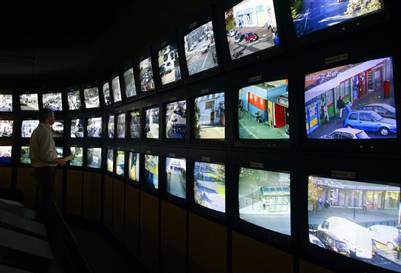
Showing posts with label privacy. Show all posts

Saturday, June 29, 2013

Multiple Government Agencies Are Keeping Records Of Your Credit Card Transactions

[The Economic Collapse Blog]

Credit Cards

Were you under the impression that your credit card transactions are private?  If so, I am sorry to burst your bubble.  As you will see below, there are actually multiple government agencies that are gathering and storing records of your credit card transactions.  And in turn, those government agencies share that information with other government agencies that want it.  So if you are making a purchase that you don't want anyone to know about, don't use a credit card.  This is one of the reasons why the government hates cash so much.  It is just so hard to track.  In this day and age, the federal government seems to be absolutely obsessed with gathering as much information about all of us as it possibly can.  But there is one big problem.  What they are doing directly violates the U.S. Constitution.  For those that are not familiar with it, the following is what the Fourth Amendment actually says: "The right of the people to be secure in their persons, houses, papers, and effects, against unreasonable searches and seizures, shall not be violated, and no Warrants shall issue, but upon probable cause, supported by Oath or affirmation, and particularly describing the place to be searched, and the persons or things to be seized."  Unfortunately, the Fourth Amendment is essentially dead at this point.  The federal government is investigating all of us and gathering information on all of us all day, every day without end. (Read More....)

Friday, June 28, 2013

Former Stasi Officer: The NSA Domestic Surveillance Program Would Have Been 'A Dream Come True' For East Germany

[Business Insider]

The National Security Agency's domestic surveillance capabilities would have been "a dream come true" for East Germany, a former lieutenant colonel in the defunct communist country's secret police told Matthew Schofield of McClatchy.

The Stasi was one of the most effective and repressive intelligence and secret police agencies in the world.

Nazi hunter Simon Wiesenthal called them "worse than the Gestapo," referring to the secret police of Nazi Germany.


“You know, for us, this would have been a dream come true,” Wolfgang Schmidt said. “So much information, on so many people.”

The comments echo those made by NSA whistleblower William Binney, who told documentarian Laura Poitras that the danger of the NSA's domestic dragnet is that "we fall into a totalitarian state. This is something the KGB, the Stasi or the Gestapo would have loved to have had."

Thursday, January 10, 2013

Disney Will Gather Private Information on Theme Park Visitors with New “Magic” Bracelets

AllGov.com

Photo Credit: Kent Phillips, Disney

Visitors to Disney World in Orlando, Florida, will be revealing virtually everything they do at the park to company officials, if they participate in its new magic bracelet program.

This spring, Disney plans to offer MyMagic+, a special rubber bracelet encoded with customers’ credit card information. By using the bracelets, visitors will be able to enter the park and purchase food or souvenirs without pulling out their wallets.

But this also means that visitors’ actions, behavior and whereabouts will be carefully tracked within the park. Disney will collect this information, from what rides people go on and all purchases they make, to which costumed characters they choose to interact with. It will all be stored in a Disney data base, conceivably for marketing purposes.-[Full Article]

Monday, December 17, 2012

The National Counterterrorism Center is In-Charge of Watching You

Susanne Posel
Occupy Corporatism
December 17, 2012


According to new rules the National Counterterrorism Center (NCTC) has been given access to all governmental databases, intelligence on all citizens in the US. The information is retained for years without review and stored in case there is ever suspicion or a US citizen is under “reasonable belief” that they are connected to terroristic activity.

By providing the US government an “indispensable source for analysis and strategic operational plans” the NCTC is considered an integral “instrument of national power” that will ensure expert perspectives are authoritatively sourced with regard to surveillance.

The NCTC is allowed to analyze and obtain copies of information on US citizens including:

• Flight records
• Americans hosting foreign-exchange students
• Casino records
• Behavior patterns

This information can be shared with other governments while searching for justification for pre-crime accusations.-[Full Article]

Saturday, July 28, 2012

Google: Didn't delete Street View data after all


LONDON (AP) -- After being caught spying on people across Europe and Australia with its Wi-Fi-slurping Street View cars, Google had told angry regulators that it would delete the ill-gotten data.
Google broke its promise.

Britain's Information Commissioner's Office (ICO) received a letter from Google in which the company admits it kept a "small portion" of the electronic information it had been meant to get rid of.-[Full Article]

Saturday, June 23, 2012

NSA social spy network Facebook to use facial recognition technology to track individuals across photos, videos

(NaturalNews) Have you ever been "tagged" by someone - a friend, a co-worker, or perhaps someone you don't really know that well but who may be a friend of a friend - on Facebook? You may want to rethink that whole concept, thanks to a little purchase the social media giant made recently.

Facebook has purchased Face.com's facial recognition technology, which techies say will make it faster and easier to tag photos, but which privacy experts say could become an issue, according to a report in InformationWeek.

The social media company, whose stock price has steadily fallen since its initial public offering in mid-May, paid between $55-60 million for the Israeli-developed mobile recognition technology, Techcrunch.com, adding that it "could potentially allow you to upload a photo to Facebook while on the go, instantly receive suggestions of whom to tag, and confirm the tags with one click."

"This is important to Facebook because right now there's probably a ton of untagged mobile photos getting posted. Those are lost opportunities for engagement because when you get notified that you've been tagged in a photo, you probably visit Facebook immediately to check it. These tags also help Facebook understand who a photo is relevant to, so it can feature it in the news feeds of your closest friends," Techcrunch.com reported.

Wednesday, June 20, 2012

Acxiom Corp: The 'faceless organization that knows everything about you'

The Week

An Arkansas company you've probably never heard of knows more about you than some of your friends, Google, and even the FBI — and it's selling your data

Feel like you're being watched? Acxiom Corp. is selling detailed data on more than 190 million Americans, ranging from their political leanings to their health concerns.

Feel like you're being watched? Acxiom Corp. is selling detailed data on more than 190 million Americans, ranging from their political leanings to their health concerns. Photo: Brand X Pictures
 
When you think of the surveillance state, you usually think of snoopy alphabet-soup government agencies like the FBI, IRS, DEA, NSA, or TSA, or cyber-snoops at Facebook or Google, says Natasha Singer in The New York Times. But there's a company you've probably never heard of that "peers deeper into American life," and probably knows more about you than any of those groups: Little Rock–based Acxiom Corp. Jeffrey Chester at the Center for Digital Democracy has dubbed Acxiom "Big Brother in Arkansas," while Gizmodo's Jamie Condliffe calls it the "faceless organization that knows everything about you." Here's what you should know about the company: -[Full Article]

Saturday, June 2, 2012

‘Human barcode’ could make society more organized, but invades privacy, civil liberties

NY Daily News

The U.S. continues to flirt with the idea of a ‘human barcode,’ an electronic ID chip assigned to every person at birth.

uniquely india/Getty Images

The U.S. continues to flirt with the idea of a ‘human barcode,’ an electronic ID chip assigned to every person at birth.

Would you barcode your baby?

Microchip implants have become standard practice for our pets, but have been a tougher sell when it comes to the idea of putting them in people.

Science fiction author Elizabeth Moon last week rekindled the debate on whether it's a good idea to "barcode" infants at birth in an interview on a BBC radio program.

“I would insist on every individual having a unique ID permanently attached — a barcode if you will — an implanted chip to provide an easy, fast inexpensive way to identify individuals,” she said on The Forum, a weekly show that features "a global thinking" discussing a "radical, inspiring or controversial idea" for 60 seconds .

Moon believes the tools most commonly used for surveillance and identification — like video cameras and DNA testing — are slow, costly and often ineffective.

In her opinion, human barcoding would save a lot of time and money.

The proposal isn’t too far-fetched - it is already technically possible to "barcode" a human - but does it violate our rights to privacy?

Wednesday, May 30, 2012

New Big Brother Cyber Weapon Can Turn on Your Computer’s Microphone, Take Screen Shots, Copy Data, Record Communications

SHFT Plan


To the disbelief of many of our readers, in a 2011 report titled Everything You Do Is Monitored, we noted that microphones and cameras on cell phones and computers allow interested parties (translated to mean your respective government) to hear and see everything going on in the direct vicinity of the device without the knowledge of its owner.

That these monitoring features are available on cell phones was a known fact, as FBI surveillance networks already have the ability to turn on any cell phone microphone or camera remotely without tipping off the user. It’s believed that this surveillance technique can work even when the cell phone user has shut down their phone, with the only surefire way to prevent such surveillance being removal of the unit’s battery.

Computers, however, were believed to be secure from these kinds of backdoors, and the majority of computer users believe their PC’s are protected from such intrusive technologies once they install virus and malware protection software.

However, a new virus identified by leading digital security firm Kaspersky Lab, is reportedly capable of not only embedding itself onto computer systems without being identified by traditional anti-virus applications, but able to execute total surveillance and monitoring that includes turning on your camera and microphone, copying your data, and recording emails and chat conversations.-[Full Article]

Sunday, May 13, 2012

US drones spy on Americans - ‘incidentally’

Russia Today

A leaked US Air Force document stipulates a drone that happens to capture surveillance images of Americans may store them for a period of 90 days. The paper appears to justify spying on citizens, as long as it is “incidental.”

­The document accepts that the Air Force may not record information non-consensually; however it does state “collected imagery may incidentally include US persons or private property without consent.”
The report, dated April 23 was discovered by Steven Aftergood of the Federation of American Scientists and has been put online.

Data that is accidentally recorded may be stored for a period of 90 days by the Pentagon while it is analyzed to see if the subjects are legitimate targets for state surveillance. The Pentagon may also disseminate this data among other government organizations if it sees fit.- [Full Article]

Sunday, April 29, 2012

Data Harvesting at Google Not a Rogue Act, Report Finds

New York Times

SAN FRANCISCO — Google’s harvesting of e-mails, passwords and other sensitive personal information from unsuspecting households in the United States and around the world was neither a mistake nor the work of a rogue engineer, as the company long maintained, but a program that supervisors knew about, according to new details from the full text of a regulatory report. - [Full Article]

Monday, April 9, 2012

Thirteen Ways Government Tracks Us

Bill Quigley
Activist Post

Privacy is eroding fast as technology offers government increasing ways to track and spy on citizens.  The Washington Post reported there are 3,984 federal, state and local organizations working on domestic counterterrorism.  Most collect information on people in the US. (Source)
Here are thirteen examples of how some of the biggest government agencies and programs track people.
One.  The National Security Agency (NSA) collects hundreds of millions of emails, texts and phone calls every day and has the ability to collect and sift through billions more.  WIRED just reported NSA is building an immense new data center which will intercept, analyze and store even more electronic communications from satellites and cables across the nation and the world.  Though NSA is not supposed to focus on US citizens, it does. (Source)
Two.  The Federal Bureau of Investigation (FBI) National Security Branch Analysis Center (NSAC) has more than 1.5 billion government and private sector records about US citizens collected from commercial databases, government information, and criminal probes. (Source)

Sunday, April 1, 2012

21 Signs That The UK Is Being Transformed Into A Hellish Big Brother Surveillance Society

End of the American Dream


Why would anyone want to live in the UK at this point?  Well, if you enjoy having every little detail of your life dictated to you by elitist control freaks then you might like living there.  But most of the rest of the world is absolutely horrified that the UK is being transformed into a hellish Big Brother surveillance society.  The UK truly is on the "cutting edge" when it comes to implementing liberty-killing rules and regulations. Many have pointed out that the United States is becoming a Big Brother police state, but the truth is that the UK is even worse.  The madness going on in the UK is where the rest of the world is headed.  Right now, there are more surveillance cameras per capita in the UK than anywhere else in the world.  If you accidentally drop a couple of potato chips in public or if you whisper a phrase that is not politically correct in a restaurant there is a good chance that you will be hauled into court.  In the UK, the public has been sold the lie that society will be better off if everything and everyone is constantly monitored.  But instead of improving society, what all of this surveillance is really doing is turning the entire nation into a very frightening version of George Orwell's 1984. (Read More.....)

Internet activity 'to be monitored' under new laws

Ministers are preparing a major expansion of the Government's powers to monitor the email exchanges and website visits of every person in the UK, it was reported today. 

UK Telegraph

Ministers are preparing a major expansion of the Government's powers to monitor the email exchanges and website visits of every person in the UK, it was reported today.

Under legislation expected in next month's Queen's Speech, internet companies will be instructed to install hardware enabling GCHQ – the Government's electronic "listening" agency – to examine "on demand" any phone call made, text message and email sent, and website accessed in "real time", The Sunday Times reported.
A previous attempt to introduce a similar law was abandoned by the former Labour government in 2006 in the face of fierce opposition.- [Full Article]

Sunday, March 25, 2012

10 Reasons Why Nothing You Do On The Internet Will EVER Be Private Again

End of the American Dream


The Internet is rapidly being transformed into a Big Brother control grid where privacy rights are being systematically strangled to death.  The control freaks that run things have become absolutely obsessed with watching, tracking, monitoring and recording virtually everything that you do on the Internet.  One thing that you can count on is that nothing you do on the Internet will ever be private again.  In fact, if you are obsessed with privacy then the last place you want to be is on the Internet.  Most Americans have absolutely no idea how far Internet surveillance has advanced in the past few years.  At this point, it would be hard to imagine any place less private than the Internet.  Do not ever put anything on the Internet that you would not want the authorities or your employer to hold you accountable for.  Basically, the Internet is creating a permanent dossier on each one of us, and we contribute to this process by freely posting gigantic volumes of information about ourselves on social media websites such as Facebook and Twitter.  The Internet is the greatest tool for mass communication that the world has perhaps ever seen, and it gives average citizens the ability to communicate with each other like never before, but there is also a downside to using the Internet.  Everything that we do on the Internet is being watched, monitored and recorded and there is no longer any such thing as Internet privacy.  If you think that you still have any privacy on the Internet, then you are either ignorant of what is going on or you are being delusional. (Read More.....)

U.S. Relaxes Limits on Use of Data in Terror Analysis

New York Times

WASHINGTON — The Obama administration is moving to relax restrictions on how counterterrorism analysts may retrieve, store and search information about Americans gathered by government agencies for purposes other than national security threats.

Attorney General Eric H. Holder Jr. on Thursday signed new guidelines for the National Counterterrorism Center, which was created in 2004 to foster intelligence sharing and serve as a terrorism threat clearinghouse.
The guidelines will lengthen to five years — from 180 days — the amount of time the center can retain private information about Americans when there is no suspicion that they are tied to terrorism, intelligence officials said. The guidelines are also expected to result in the center making more copies of entire databases and “data mining them” using complex algorithms to search for patterns that could indicate a threat. 

Intelligence officials on Thursday said the new rules have been under development for about 18 months, and grew out of reviews launched after the failure to connect the dots about Umar Farouk Abdulmutallab, the “underwear bomber,” before his Dec. 25, 2009, attempt to bomb a Detroit-bound airliner. - [Full Article]

Big Brother just got scarier: Japanese CCTV camera can scan 36 million faces per second - and recognise anyone who has walked into its gaze

- Biometric camera stores details of everyone who walks past it
- Stores 'library' of face info
- Can scan through 36 million faces per second searching for people
- Will be on sale to governments within next year

UK Daily Mail

A new camera technology from Hitachi Hokusai Electric can scan days of camera footage instantly, and find any face which has EVER walked past it.

Its makers boast that it can scan 36 million faces per second.

The technology raises the spectre of governments - or other organisations - being able to 'find' anyone instantly simply using a passport photo or a Facebook profile.

The 'trick' is that the camera 'processes' faces as it records, so that all faces which pass in front of it are recorded and stored instantly.

Faces are stored as a searchable 'biometric' record, storing the unique

When the police - or anyone else - want to search for a particular individual, they're searching through a gallery of pre-indexed faces, rather than a messy library of footage. - [Full Article]

Friday, March 23, 2012

Is nothing off limits? Now Google plans to spy on background noise in your phone calls to bombard you with tailored adverts

- Patent also describes using other environmental factors such as air temperature to produce ads

Adverts could soon be tailored according to the background noise around you when using your smartphone, if a patent application by Google becomes reality.

The search engine giant has filed for a patent called ‘Advertising based on environmental conditions’.

As that title implies, it’s not just background sounds that could be used to determine what adverts you seen on your mobile phone. The patent also describes using ‘temperature, humidity, light and air composition’ to produced targeted adverts. - [Full Article]

Tuesday, March 20, 2012

Is your TV watching you? Samsung's latest sets with built-in cameras spark concerns

Samsung's latest breed of plasmas and HDTVs may allow hackers, or even the company itself, to see and hear you and your family, and collect extremely personal data.


The new models, which are closer than ever to personal computers, offer high-tech features that have previously been unavailable, including a built-in HD camera, microphone set and face and speech recognition software.


This software allows Samsung to recognise who is viewing the TV and personalises each person’s experience accordingly. The TV also listens and responds to specific voice commands.
is your tv watching you
High-tech: Samsung's latest sets feature built-in HD cameras, microphone sets and face and speech recognition software

 But some critics have suggested that the TV company could be spying on you, or even watching and listening to you - without your knowledge - through these features.


Gary Merson, who runs website HD guru, said that because there is no way of disconnecting the camera and microphone, users cannot be 100 per cent sure that Samsung is not collecting data and passing it on to third parties.

Read more: http://www.dailymail.co.uk/sciencetech/article-2117493/Samsungs-latest-TV-sets-built-cameras-spark-concerns.html#ixzz1pf2yTyyL

Sunday, March 18, 2012

How Companies Learn Your Secrets

New York Times


Andrew Pole had just started working as a statistician for Target in 2002, when two colleagues from the marketing department stopped by his desk to ask an odd question: “If we wanted to figure out if a customer is pregnant, even if she didn’t want us to know, can you do that? ”

As the marketers explained to Pole — and as Pole later explained to me, back when we were still speaking and before Target told him to stop — new parents are a retailer’s holy grail. Most shoppers don’t buy everything they need at one store. Instead, they buy groceries at the grocery store and toys at the toy store, and they visit Target only when they need certain items they associate with Target — cleaning supplies, say, or new socks or a six-month supply of toilet paper. But Target sells everything from milk to stuffed animals to lawn furniture to electronics, so one of the company’s primary goals is convincing customers that the only store they need is Target. But it’s a tough message to get across, even with the most ingenious ad campaigns, because once consumers’ shopping habits are ingrained, it’s incredibly difficult to change them.  - [Full Article]