MYFOXNY.COM -The board hand-picked by Mayor Michael
Bloomberg that must approve his ban of selling large sugar-filled drinks
at restaurants might be looking at other targets.
The New York City Board of Health showed support
for limiting sizes of sugary drinks at a Tuesday meeting in Queens.
They agreed to start the process to formalize the large-drink ban by
agreeing to start a six-week public comment period.
At the meeting, some of the members of board said they should be considering other limits on high-calorie foods.
One member, Bruce Vladeck, thinks limiting the sizes for movie theater popcorn should be considered.
"The popcorn isn't a whole lot better than the soda," Vladeck said.
Another board member thinks milk drinks should fall under the size limits.
"There are certainly milkshakes and milk-coffee
beverages that have monstrous amounts of calories," said board member
Dr. Joel Forman.
Mayor Bloomberg says the drink rules are an
attempt to fight obesity in the city. It would limit food service
establishments in the city from serving drinks bigger than 16 ounces but
would allow refills.
The New York City Restaurant Association is fighting the proposal and is considering legal action of it goes into effect.
By Mike Adams, NaturalNews Editor August 4 - One of the most astounding elements of yesterday's SWAT-style armed raid on Rawesome Foods in Venice, California is the simple fact that both California and the U.S. government are completely and utterly bankrupt...
By Mike Adams, NaturalNews Editor August 4 - Troy Casey is known as the "Certified Health Nut" (http://www.youtube.com/user/certifiedhealthnut), and he's been a long-time member of Rawesome Foods which was just hit with a SWAT-style armed raid (http://www...
By Mike Adams, NaturalNews Editor August 4 - NaturalNews is now publishing some of the very first photos taken in the aftermath of the Rawesome Food raids, which involved a multi-agency raid against Rawesome Foods for selling unpasteurized milk and raw...
By Mike Adams, NaturalNews Editor August 3 - The recent act of government-sponsored terrorism against Rawesome Foods in Venice, California was authorized by a woman named Michelle LeCavalier. She signed the warrant which stated that she believed there...
August 3 - As promised, a massive public protest is now being announced to give the members of the public an opportunity to voice their outrage against today's arrest of three raw foods advocates who are all being charged...
By Mike Adams, NaturalNews Editor August 3 - The raid on Rawesome Foods by a combined force of agents from the FDA, LA County Dept of Agriculture, CDC and the LA County Sheriff's office wasn't the only SWAT-style armed raid that took place today. Sharon...
By Mike Adams, NaturalNews Editor August 3 - From the SWAT-style armed raid on the raw milk buying club known as Rawesome Foods, clandestine video footage is starting to emerge. Although the footage is shaky and low quality (from a cell phone), it shows...
By Mike Adams, NaturalNews Editor August 3 - This is a NaturalNews exclusive breaking new report. Please credit NaturalNews.com. A multi-agency SWAT-style armed raid was conducted this morning by helmet-wearing, gun-carrying enforcement agents from the...
The recent class-action lawsuit brought against Taco Bell raised questions about the quality of food many Americans eat each day.
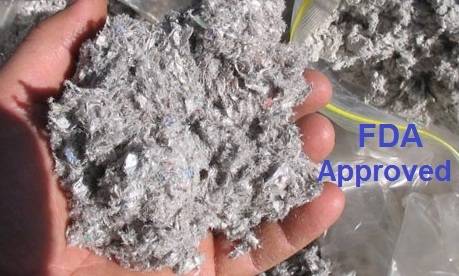
Chief among those concerns is the use of cellulose (wood pulp), an extender whose use in a roster of food products, from crackers and ice creams to puddings and baked goods, is now being exposed. What you’re actually paying for – and consuming – may be surprising...[Full Article]
Tuesday, April 12, 2011
Chicago school bans some lunches brought from home To encourage healthful eating, Chicago school doesn't allow kids to bring lunches or certain snacks from home — and some parents, and many students, aren't fans of the policy
ChicagoTribune
Fernando Dominguez cut the figure of a young revolutionary leader during a recent lunch period at his elementary school.
"Who thinks the lunch is not good enough?" the seventh-grader shouted to his lunch mates in Spanish and English.
Dozens of hands flew in the air and fellow students shouted along: "We should bring our own lunch! We should bring our own lunch! We should bring our own lunch!"
Fernando waved his hand over the crowd and asked a visiting reporter: "Do you see the situation?"
At his public school, Little Village Academy on Chicago's West Side, students are not allowed to pack lunches from home. Unless they have a medical excuse, they must eat the food served in the cafeteria...[Full Article]
The "rice" is made by mixing potatoes, sweet potatoes and plastic. The potatoes are first formed into the shape of rice grains. Industrial synthetic resins are then added to the mix. The rice reportedly stays hard even after being cooked.
The Korean-language Weekly Hong Kong reported that the fake rice is being sold in the Chinese town of Taiyuan, in Shaanxi province.
"A Chinese Restaurant Association official said that eating three bowls of this fake rice would be like eating one plastic bag. Due to the seriousness of the matter, he added that there would be an investigation of factories alleged to be producing the rice," Very Vietnam noted...
Food prices are skyrocketing across the world, and last month, they peaked to the highest levels since the UN's Food and Agriculture Organization began indexing them in 1990. In the Middle East, wheat prices are playing a role in the ongoing unrest, particularly in Egypt, the world's largest wheat importer. Laurie Garrett, CFR's senior fellow for global health, says the rising prices of staple grains in the region are adding to a "real sense of anger and injustice." She notes that though governments are attempting to hold prices down artificially, "very few governments can really get away with it because they just can't afford it." The food price crisis, she says, is "a destabilizing moment in terms of global governance" and to meet food demand going forward, the food production in the developing world must become more efficient and "every aspect of farming, harvesting, delivery, and distribution has to improve dramatically."...
(NaturalNews) Grocery prices increased at more than 50 percent the rate of inflation in 2010, according to data from the U.S. Bureau of Labor Statistics.
Food prices increased an average of 1.7 percent between November 2009 and November 2010, in comparison with a general inflation rate of only 1.1 percent. The greatest price increases were seen among meat, poultry, fish and eggs, which went up in cost by 5.8 percent. The price of sugar and sweets increased 1.2 percent, the price of fats and oils increased 3 percent and the price of dairy-based products increased 3.8 percent.
The only commodities to go up in price more than food were medical care and transportation.
"I noticed just this month that my grocery bill for the same old stuff -- cereal, eggs, milk, orange juice, peanut butter, bread -- spiked $25," said Sue Perry, deputy editor of "ShopSmart" magazine. "It was a bit of sticker shock."
The rises in price were caused in part by climate-related crop failures in several major food exporting countries. In addition, rising demand for corn from the biofuels industry has pushed up prices for animal feed, leading to higher meat, dairy and egg costs. Finally, rising fuel prices have increased food production and transportation costs as well.
Prices are only likely to keep rising. The Department of Agriculture has forecast a further 3 percent rise in food prices in 2011, but openly admits that the estimate is conservative.
"The USDA always plays it safe," said Wells Fargo agricultural economist Michael Swanson. Swanson predicted price increases of 4 percent, the highest since the 5.5 percent increases that led to riots worldwide in 2008.
Major food producers including Kraft and General Mills have already announced plans to increase the prices of their products. Just how much of that increase will be passed along to consumers is uncertain, as retailers may try to force prices lower to keep shopper volume high.
"Food is a high-frequency driver," Swanson said. "So if stores like Walmart and Kmart want to get shoppers in the door, it's to their benefit to keep prices low."
A government report unexpectedly showed U.S. grain supplies tightening Wednesday, causing a surge in commodity prices and raising expectations for inflation at the grocery store.
Futures prices for corn and soybeans jumped about 4 percent after the U.S. Department of Agriculture said production of those key crops fell in 2010. Analysts said prices also will be pushed higher in meat markets, where live cattle already is trading at record levels per pound.
“For many shoppers, this almost comes at the worst time,” said Robert Goldin, executive vice president at the food consulting firm Technomic Inc. He said prices also will be pushed higher by food producers’ rising energy costs...
A recent report by the U.S Department of Agriculture shows future prices for some key grains will be skyrocketing in the future, according to the Chicago Sun-Times. That could mean inflation at the grocery store.
It is expected that prices for corn and soybeans will go up about 4 percent after production of those crops fell last year. Experts say producers' rising energy costs also is a contributing factor...
Overheating emerging markets, in China in particular, pose the biggest threat to the market and political situation in 2011 according to Philippe Gijsels, head of research at BNP Paribas Fortis Global Markets.
“These economies are clearly overheating and governments are putting measures in place to slow them down to fight inflationary pressure. More than anything else, food inflation is a problem," Gijsels told CNBC.com.
"In countries were 70 percent to 80 percent and sometimes more of a family's budget goes to food, explosive price rises risk to destabilize these societies. Remember the old saying: 'hunger starves civilizations,’” he added...
(CBS) NEW YORK -- Don't look now, but inflation is expected to hit food hard this year.
"Corn is a big one" in the higher prices department, Bloomberg Businessweek Assistant Managing Editor Sheelah Kolhatkar told "Early Show on Saturday Morning" co-anchor Betty Nguyen. "The Agriculture Department released a report a couple of days ago about crop forecasts for the year and predicted corn production is going to go down very significantly, which led to a spike in prices."
Why corn's rise?
"There are a lot of reasons," Kolhatkar replied. "Weather is cited as a big one. There's been sort of freak weather in different parts of the world. Russia experienced a drought. There are floods in Australia. There's been sort of freezing weather in Florida. Our own Midwest experienced flooding earlier this year.
"And because the market for a lot of these food commodities is global, when something strange happens somewhere, that can affect a crop.
Making matters worse, she says, "Corn has sort of a ripple effect, because it goes into a lot of different foods, and it is a big component of feed for animals. So, meat, as a result, is expected to go up quite a bit -- beef and pork were cited. Other grains, wheat, and (many) fruits and vegetables."...
The stunningly violent food riots in Tunisia and Algeria show just how quickly things can change. Just a few months ago, these two northern Africa nations were considered to be very stable, very peaceful and without any major problems. But now protesters are openly squaring off with police in the streets. Many of the protesters are throwing "fire bombs" or are shooting fireworks at the authorities, and the police are responding with a tremendous amount of violence themselves. In Algeria, several protesters have been killed by police and several others have actually set themselves on fire to protest the economic conditions. In Tunisia, more than 100 people have been killed and the president of that country actually had to flee for his life. But on a global scale, food shortages have not even gotten that bad yet. Yes, food prices are starting to go up and food supplies are a little bit tighter right now, but much worse times than these are coming. So what in the world are the cities of the world going to look like when we have a very serious food shortage?
Just as we saw during the food riots of 2008, when people get to the point where they can't even feed themselves anymore, they tend to lose it. In the video posted below, you can really feel the desperation of these young Algerians as they riot in the streets....
This next video is of the food riots in Tunisia. You will not want to let any young children watch this video. In fact, if watching police beat and smash protesters laying on the ground upsets you, then you might not want to watch this video either. The massive food riots that have erupted in Tunisia have left many city streets looking like war zones and at this point it is being reported that the violence has left over 100 people dead. The president of Tunisia has left the country because of the rioting, and an interim president has been sworn in. It is hoped that this will help restore order. This video is absolutely stunning....
You see, the truth is that it is not just in the United States that people are becoming angry at government. All over the world, frustration is boiling over. But unlike the United States, where food is still very plentiful, in many areas of the world it is the deteriorating economic conditions that are sparking many of these riots.
According to the FAO, the global price of food hit a new record high in December. For most Americans and Europeans, a rise in the price of food is just an inconvenience. But in many areas of the world, even a relatively small rise in the price of food can mean that the survival of millions is suddenly threatened.
Global authorities are concerned that these food riots might start spreading - especially if the extremely harsh weather all over the globe continues to damage crops.
In fact, there are some signs that economic unrest is already beginning to spread....
*In the nation of Jordan, peaceful demonstrations were held in several locations around the country on Friday to protest rising food prices.
*In Libya, protests about the late completion of government subsidized housing entered their third day on Sunday. Reportedly, hundreds of uncompleted units have been taken over by protesters and so far the police are not taking action to evict them. There is also growing concern that the food riots in neighboring Tunisia will soon pour over into Libya.
*Economic protests also been reported recently in Mozambique, Morocco and Chile.
Sadly, the desperate economic conditions that are sparking these food riots did not develop overnight. Rather, they have been building for decades. The truth is that the new "global economy" is designed to funnel more and more of the wealth of the world into the hands of the wealthiest 0.001% of the global population. Everyone else is left to fight with one another to divide up a pie that is increasingly shrinking.
Just consider the following five facts....
#1 Approximately 1 billion people throughout the world go to bed hungry every single night.
#2 Approximately 28 percent of all children in developing countries are considered to be underweight or have had their growth stunted as a result of malnutrition.
#3 Every 3.6 seconds someone starves to death and three-quarters of them are children under the age of 5.
#4 "Least developed countries" spent 9 billion dollars on food imports in 2002. By 2008, that number had risen to 23 billion dollars.
#5 A study by the World Institute for Development Economics Research discovered that the bottom half of the world population owns approximately 1 percent of all global wealth.
So if things are this bad already, what kind of food riots are we going to see if all of this weird weather continues and global harvests are much lower than anticipated in 2011?
Most Americans have a really hard time even imagining such a thing, but the truth is that we are just one really bad harvest away from mass starvation in many areas of the world.
We are not going to see mass starvation in the United States in 2011, but we could see food prices start to go up significantly. Keep in mind that more than 43 million Americans are already on food stamps. The incredible abundance of food that we have been enjoying for so many decades is not guaranteed to last indefinitely.
Dennis Conley, an agricultural economist at the University of Nebraska, recently told MSNBC that food reserves in the United States are already disturbingly low....
"I haven't seen numbers this low that I can remember in the last 20 or 30 years."
So yes, there are legitimate reasons to be concerned.
The world really is on the verge of a major food crisis, and if global harvests are not significantly better than most analysts are currently projecting, then we are likely to see a lot more food riots around the globe before 2011 is over.
[Webmaster - Start stocking up on non-perishable foods, water filters, and canning supplies NOW... Enough to get you through a 6 month to 1 year period of time.]
Looking almost as fresh as the day it was bought, this McDonald's Happy Meal is in fact a staggering six months old.
Photographed every day for the past half a year by Manhattan artist Sally Davies the kids meal of fries and burger is without a hint of mould or decay.
In a work entitled The Happy Meal Project, Mrs Davies, 54, has charted the seemingly indestructible fast food meals progress as it refuses to yield to the forces of nature...
Consumer groups fear green light for engineered species will bring environmental disaster to the oceans
A genetically modified salmon, rear, and a non-genetically modified salmon, foreground. Photograph: AP
Buried in a prospectus inviting investors to buy shares in a fledgling biotech company is an arresting claim attributed to the UN's Food and Agriculture Organisation.
"Commercial aquaculture is the most rapidly growing segment of the agricultural industry, accounting for more than $60bn sales in 2003. While land-based agriculture is increasing between 2% to 3% per year, aquaculture has been growing at an average rate of approximately 9% per year since 1970."
And then the prospectus for the US company AquaBounty offers this observation to tantalise prospective investors: "The traditional fishery harvest from the ocean has stagnated since 1990."
So what is to be done to satisfy the world's seemingly insatiable appetite for fish? An appetite that will see the consumption of farmed fish outpace global beef consumption by nearly 10% within five years, according to the UN?
AquaBounty, whose shares are sold on London's Alternative Investment Market, thinks it has the answer. And if, as looks increasingly likely, the US government agrees, the implications for global food production will be enormous. Welcome to the new world heralded by the "GM salmon".
The company's dream of selling genetically modified salmon eggs that allow the fish to grow to maturity in half the normal time received a giant fillip last week when it announced that the US Food and Drug Administration (FDA) was close to granting approval...
Presented by President Hugo Chávez as an instrument to make shopping for groceries easier, the ``Good Life Card'' is making various segments of the population wary because they see it as a furtive attempt to introduce a rationing card similar to the one in Cuba.
The measure could easily become a mechanism to control the population, according to civil society groups...
S 510, the Food Safety Modernization Act, may be the most dangerous bill in the history of the US
1. It puts all US food and all US farms under Homeland Security and the Department of Defense, in the event of contamination or an ill-defined emergency
2. It would end US sovereignty over its own food supply by insisting on compliance with the WTO, thus threatening national security.
3. It would remove the right to clean, store and thus own seed in the US, putting control of seeds in the hands of Monsanto and other multinationals, threatening US security
4. It deconstructs what is left of the American economy. It takes agriculture and food, which are the cornerstone of all economies, out of the hands of the citizenry, and puts them under the total control of multinational corporations
Since the story first broke, a lot has happened. One reason for this could be that food is being poisoned. Collecting rainwater is now illegal in many states. Your intake is being controlled. For more information, visit the following articles as well: http://www.firetown.com/blog/2010/08/...
S 510, the Food Safety Modernization Act, may be the most dangerous bill in the history of the US. It is to our food what the bailout was to our economy, only we can live without money.
"If accepted [S 510] would preclude the public's right to grow, own, trade, transport, share, feed and eat each and every food that nature makes. It will become the most offensive authority against the cultivation, trade and consumption of food and agricultural products of one's choice. It will be unconstitutional and contrary to natural law or, if you like, the will of God." ~Dr. Shiv Chopra, Canada Health whistleblower
"If people let the government decide what foods they eat and what medicines they take, their bodies will soon be in as sorry a state as are the souls of those who live under tyranny." ~Thomas Jefferson
An animal welfare group on Friday delivered a petition of 7,000 names calling on the government to prevent products from cloned animals entering the food chain.
The petition, delivered by activists wearing "cloned" masks of Prime Minister David Cameron, was hastily organised after news emerged this week that meat from offspring of a cloned cow had entered the food chain.
Written by Compassion for World Farming, the petition called for more openness about food production and expressed concern about the welfare of cloned animals...
The grocery store, along with your kitchen sink, are two of the most dangerous places in the world.
In a special video, Alex Jones addresses one of the darkest modes of power the globalists have used to control the population– food. The adulteration of the planet’s staple crops, genetically-altered species and intentionally-altered water, food and air all amount to a Eugenics operation to weaken the masses and achieve full spectrum domination.
PART 1/2
People the world over, but especially in the United States are under chemical attack. Deadly and dangerous toxins ranging from Aspartame to Fluoride, GMO, Mercury-tainting, pesticides, cross-species chimeras, plastic compounds in chicken, high fructose corn syrup, cloned meat, rBGH and new aggressive GM species of salmon have all entered into our diets and environments– whether we want it or not.
PART 2/2
Many of these substances knowingly cause or are linked with sterility, low birth weight, miscarriages, smaller or deformed offspring, as well as organ failure, cancer, brain tumors and Death itself, what you DON’T know about on your grocery shelves can hurt you. Further, Alex demonstrates that a pattern of buried studies, fraudulent statistics and a will reduce global population all point to the deliberate criminal poisoning of the food and water supply.
Suffer no fools if those you show refuse to believe what is going on. Instead, research these important areas for yourself, and warn those you love about need to stop their food from being used as a Depopulation-weapon against us all. Please share this important video with everyone, so the truth about these substances can be known.
A police raid on a members-only grocery has devotees of unpasteurized dairy up in arms. In surveillance footage posted by the Los Angeles Times, four officers, with guns drawn, snaked through the aisles of Venice, California’s Rawsome Foods in search of outlaw raw cow and goat milk – which they found and confiscated...
U.S. McNuggets not only contain more calories and fat than their British counterparts, but also chemicals not found across the Atlantic.
CNN investigated the differences after receiving a blog comment asking about them.
American McNuggets (190 calories, 12 grams of fat, 2 grams of saturated fat for 4 pieces) contain the chemical preservative tBHQ, tertiary butylhydroquinone, a petroleum-based product. They also contain dimethylpolysiloxane, “an anti-foaming agent” also used in Silly Putty...
Growing demand from emerging markets and for biofuel production will send prices soaring, according to the OECD and the UN Food and Agriculture Organisation
Food prices are set to rise as much as 40% over the coming decade amid growing demand from emerging markets and for biofuel production, according to a United Nations report today which warns of rising hunger and food insecurity.
Attorneys for the federal government have argued in a lawsuit pending in federal court in Iowa that individuals have no "fundamental right" to obtain what food they choose.
The brief was filed April 26 in support of a motion to dismiss a lawsuit filed by the Farm-to-Consumer Legal Defense Fund over the U.S. Food and Drug Administration's ban on the interstate sale of raw milk.
"There is no 'deeply rooted' historical tradition of unfettered access to foods of all kinds," states the document signed by U.S. Attorney Stephanie Rose, assistant Martha Fagg and Roger Gural, trial attorney for the U.S. Department of Justice.
"Plaintiffs' assertion of a 'fundamental right to their own bodily and physical health, which includes what foods they do and do not choose to consume for themselves and their families' is similarly unavailing because plaintiffs do not have a fundamental right to obtain any food they wish," the government has argued.
The incident was followed by a report a few days later that documented a proposal pending in Congress that critics say would do for the nation's food supply what the new health-care reform law has done for health-care resources...
ORCHARD, Texas – A third-grader at Brazos Elementary was given a week’s detention for possessing a Jolly Rancher.
School officials in western Fort Bend County are defending the seemingly harsh sentence. The school’s principal and superintendent said they were simply complying with a state law that limits junk food in schools.
But the girl’s parents say it’s a huge overreaction.
“I think it’s stupid to give a kid a week’s worth of detention for a piece of candy,” said Amber Brazda, the girl’s mother. "The whole thing was just ridiculous to me."...